The Allure of Online Anonymity: From Shadows to Psychology
- Jul 21, 2025
- 2 min read

From login-free websites to the covert corners of the dark web, the internet offers countless avenues for users who wish to remain anonymous. For some, it’s simply about privacy. For others, it’s a conscious rejection of surveillance or a desire to explore sensitive topics without fear of judgment. I've long been fascinated by the motivations behind this digital cloak and the different motivations behind this anonymity.
Often, online anonymity is assumed to be a veil for malicious intent. But in today's climate where artificial intelligence accelerates identity tracking, and concerns over government oversight are mounting the quest for anonymity can be seen as digital resistance, or even self-preservation.
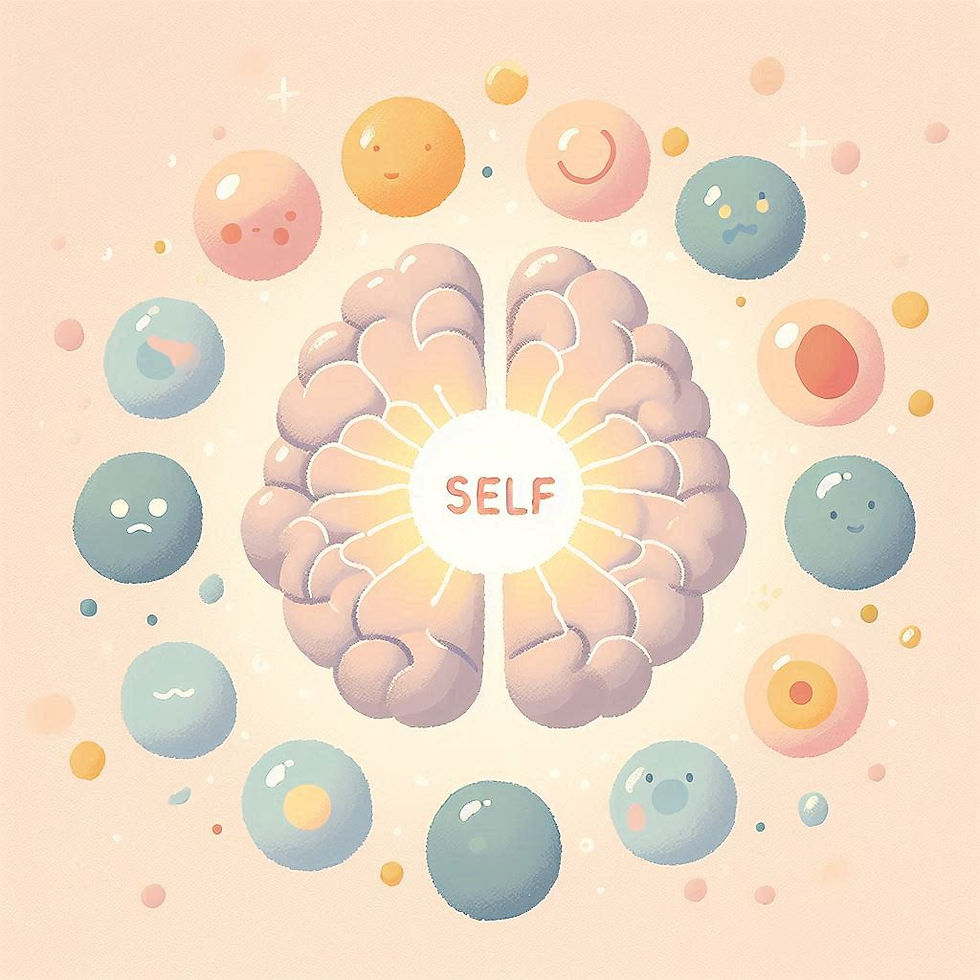
Psychologists have studied the effects of anonymity long before the internet existed. In physical crowds, anonymity was recognized as a powerful psychological force. One key outcome is deindividuation, a phenomenon where individuals submerged in a crowd lose self-awareness, personal accountability, and identity. As self-awareness fades, behaviour tends to shift.
This concept has seamlessly translated into online spaces. Platforms like 4chan and even to a lesser extent, X (formerly Twitter) demonstrate how digital gatherings can mimic crowd psychology. Despite not being fully anonymous, users often feel part of a collective with minimal consequences. This can encourage behaviours or belief systems they might never consider alone. The rise of movements like QAnon exemplifies these individuals are drawn into a digital "crowd" begin adopting narratives not just out of belief, but out of belonging.
Psychologists John Suler and Zuoming Wang argue that this shift from personal identity to group identity is central to the Social Identity Model of Deindividuation Effects (SIDE). According to this model, anonymity can amplify identification with group norms whether that’s radical transparency or unchecked hostility depending on the environment.
That’s not to say anonymity is inherently harmful. Studies show it can foster open dialogue, encourage self-expression, and offer refuge to marginalized voices. Like all psychological phenomena, its power lies in context.
Online anonymity isn’t just a tool it’s a mirror into human behaviour, shaped by trust, fear, identity, and community. Whether one uses it to explore ideas safely, connect without judgment, or participate in movements that challenge the status quo, it reveals something deep about the relationship between freedom and identity in our digital age.
Sources for further reading
Deindividuation Theory Festinger, Pepitone & Newcomb (1952); Zimbardo (1969). This foundational research explores how anonymity within crowds leads to diminished self-awareness and increased impulsivity.
Social Identity Model of Deindividuation Effects (SIDE)Spears & Lea (1992); Wang, Z. (2018). Explores how anonymity in computer-mediated communication can strengthen group identity and influence behavior based on group norms.
Online Disinhibition EffectSuler, J. (2004). Describes how people behave with less restraint online, driven by anonymity, invisibility, and lack of immediate consequences.
QAnon and Group Identity Pierre, J. (2020). Analyzes the psychological mechanisms behind why individuals are drawn to conspiratorial movements like QAnon, including social identity and collective validation.
Psychological Motives of QAnon Followers Douglas, K. M., et al. (2017); Green, A., et al. (2022). Highlights how cognitive biases, motivated reasoning, and perceived threats contribute to conspiracy belief formation.
Anonymity and Expression OnlineWallace, P. (2001); Suler, J. (2004). Investigates how online environments allow for more candid self-expression and exploration of identity due to reduced social pressure.

Comments